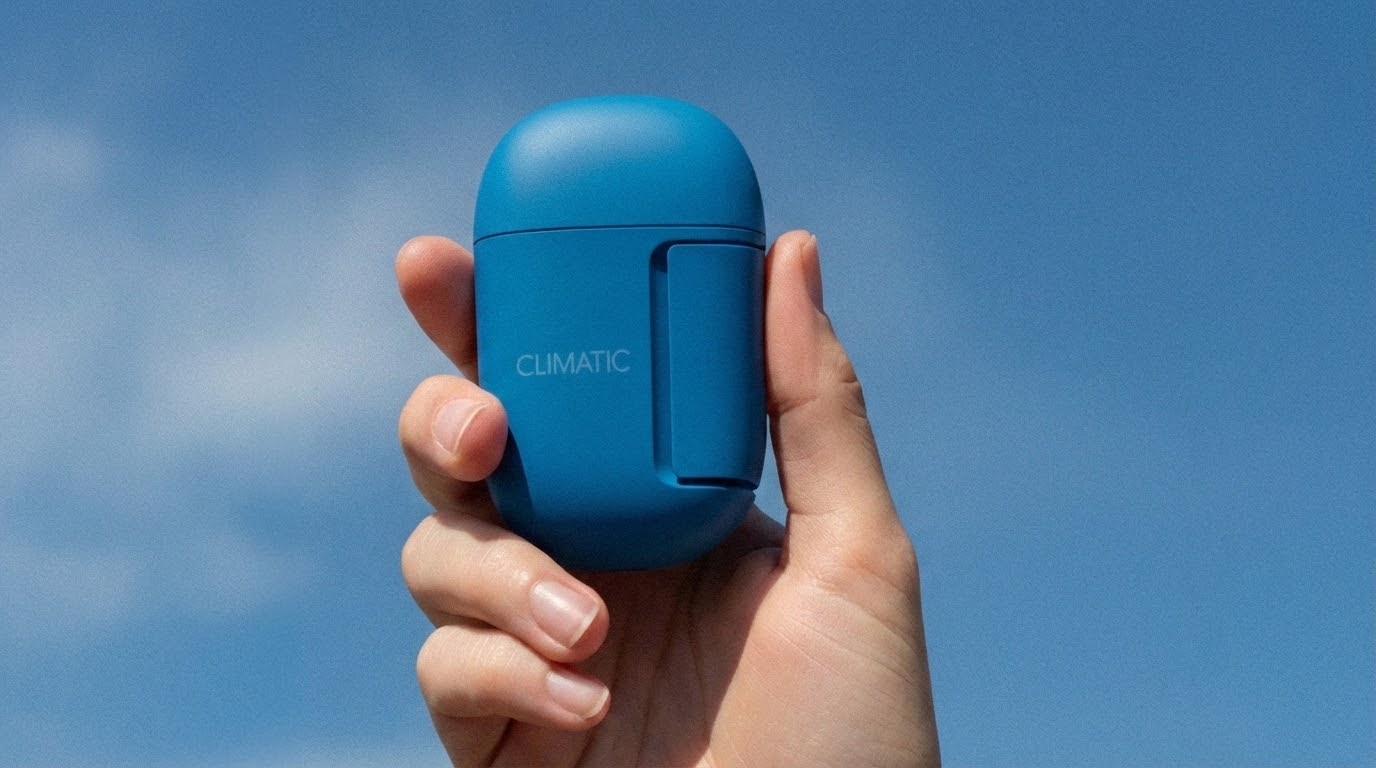
Earlier this month, Climatic Health officially launched its first product, marking the beginning of what we believe is a new category: lung health as a daily practice.
For most of modern healthcare, lung health has been treated as something that only matters when it breaks.
We think that’s about to change.
Earlier this month, Climatic Health officially launched its first product, LMAX - a daily lung health system designed to support airway clearance and improve breathing in under 30 seconds. It’s an important milestone for the team, but more broadly, it marks the beginning of what we believe is a new category: lung health as a daily practice.
An Overlooked Input to Health
Over the past decade, consumers have fundamentally reshaped how they think about their health. Entire categories have emerged around sleep, gut health, and metabolic function - each built on the idea that small, consistent behaviors can compound into meaningful long-term outcomes.
But one of the most important inputs has remained largely invisible: the air we breathe.
This is increasingly difficult to ignore. More than 130 million Americans live in areas with poor air quality, and tens of millions experience some form of chronic or exercise-induced respiratory constraint. At the same time, environmental exposure - from pollution to wildfire smoke - is becoming a more consistent part of daily life.
Despite this, the solutions available today remain fragmented. At one end of the spectrum are prescription drugs and medical devices, typically used reactively and often with meaningful tradeoffs. At the other are consumer products that lack clinical grounding or sustained efficacy. There has been little in between.
Climatic is building into that gap.
From Reactive Treatment to Daily Care
What makes Climatic interesting is not just the product itself, but the framing behind it.
Rather than positioning lung health as a condition to manage, the company treats it as something that can be supported continuously - in the same way consumers now think about digestion, recovery, or skin health. LMAX is designed to fit into a daily routine, with a short, repeatable action that reinforces consistency over time.
That shift - from episodic treatment to ongoing care - is how new consumer health categories tend to form. We’ve seen it play out across multiple domains, where behavior change becomes the foundation for both product adoption and long-term value creation.
In that sense, Climatic is not entering an existing market so much as helping define one.
Where Climate and Health Converge
The timing of this category is not accidental.
Climate change is increasingly experienced not as an abstract, long-term issue, but as a series of everyday exposures. Air quality, allergens, and particulate matter are becoming part of how people experience their environments on a daily basis, with direct implications for respiratory health.
As a result, the boundary between environmental conditions and personal health is collapsing.
Climatic sits directly at this intersection. The company’s approach reflects a broader shift toward helping individuals adapt to their environments in real time, rather than relying solely on healthcare systems to respond after the fact. This is consistent with a larger movement in digital health toward more continuous, consumer-driven models of care — particularly in areas where infrastructure alone cannot keep up with changing external conditions.
In this context, lung health becomes not just a medical concern, but a form of climate resilience at the individual level.
Hardware, Habit, and Trust
In consumer health, the companies that endure are the ones that successfully turn behavior into habit and habit into trust. As AI erodes software differentiation, defensibility is shifting toward companies that can translate complexity into something intuitive, consistent, and embedded in everyday life.
That’s where hardware can play an important role. Physical products create a natural point of engagement, making it easier to establish a repeatable routine that software alone often struggles to achieve. In Climatic’s case, the device is less about the standalone product and more about anchoring a daily habit - a simple, consistent action that reinforces usage over time and opens the door to deeper layers of personalization, data, and insight.
Brand is equally important here. In categories that require behavior change, trust isn’t built through one interaction; it’s built through repetition, design, and clarity over time. Climatic’s team brings a strong understanding of how to do this, combining scientific depth with consumer sensibility from their backgrounds across Seed Health, Harry’s, and leading respiratory research institutions.
In that sense, hardware, habit, and brand are tightly linked. The device creates the routine, the routine builds trust, and over time that trust becomes the foundation for a durable, long-term relationship with the user.
Why We Invested and What Comes Next
Our investment in Climatic Health, beginning with our first check in January 2025, reflects themes we continue to focus on at Cade. The company sits at the intersection of consumer health and environmental exposure, and approaches healthcare as something integrated into daily life rather than a series of discrete interventions.
Just as importantly, we were drawn to the team’s deep understanding of consumer behavior, particularly how to build habit, trust, and culture around a product. In emerging categories, distribution isn’t just about channels; it’s about creating something people adopt, identify with, and return to consistently. Eric Kau, Allie Melnick, and the team bring a strong track record of doing exactly that.
We were also excited to partner alongside an exceptional group of investors, including Lerer Hippeau, Good Friends, and Spacestation, all of whom bring deep experience in building and scaling breakout consumer brands.
LMAX is an important milestone for the team and for this emerging category. Having used it ourselves, we’ve felt the difference - and we’re excited to see it reach more people.
More broadly, we believe the shift underlying Climatic - toward more proactive, consumer-driven approaches to health - will continue to accelerate. Some of the most meaningful changes in healthcare come not from entirely new technologies, but from rethinking how existing ones are used and when they are applied. In this case, it starts with something simple: taking an input that has historically been overlooked, and turning it into a daily practice.
Climatic is doing exactly that, and we’re excited to be part of it.
Check it out for yourself: climatichealth.com